Number Match: Train your brain
Greyfun GamesTrivia
5.056.00 Reviews
- Version
- 1.13
- Installs
- 100.00K
- Age Rating
- Everyone
Screenshots
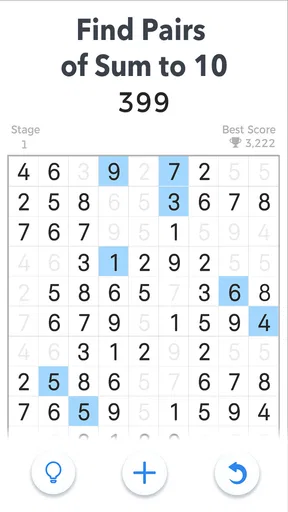
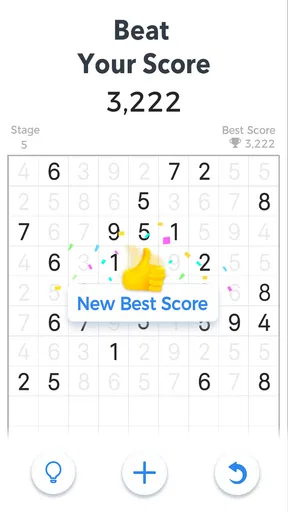

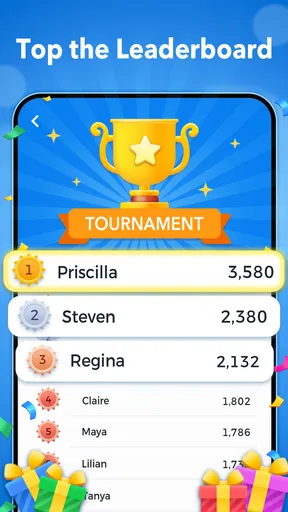
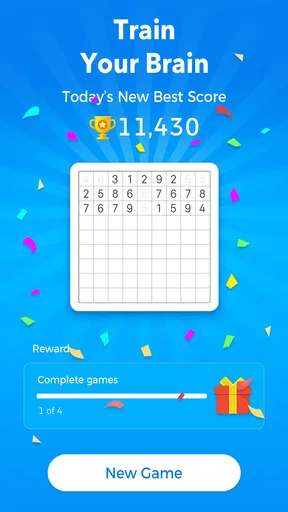
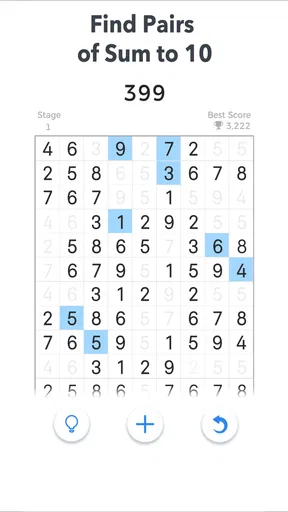
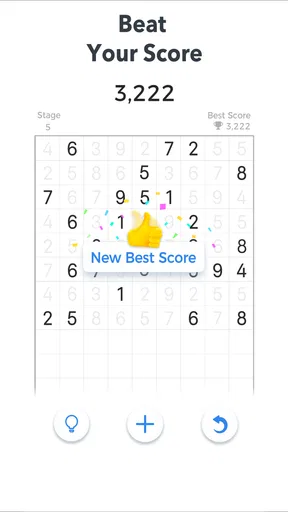
Our Review of Number Match: Train your brain
 Analysis by Appyee
Number Match: Train your brain is a free trivia game from Greyfun Games built around one clear idea: finding pairs of numbers and using logic and basic mathematics to solve each puzzle. I found that narrow focus more appealing than I expected. It is not trying to be a huge quiz collection or a fast arcade distraction. Instead, it gives you small number-based problems that ask for attention, pattern recognition, and a little patience.
The central capability is the way it turns number matching into a reasoning exercise. You are not simply looking for identical symbols as quickly as possible. The useful question is often whether two numbers can be connected by a simple relationship, such as matching directly or combining in a way the puzzle accepts. That makes each move feel more deliberate than a standard memory game. The real strength is how a simple pair-finding task becomes a compact logic workout.
I would describe it as a casual math puzzle game with a trivia-style presentation rather than a traditional question-and-answer quiz. That distinction matters. If you want general knowledge questions, this is not the right interpretation of “trivia.” If you enjoy spotting relationships between numbers, clearing a board, and checking whether your mental shortcut is correct, the format makes much more sense.
Why the number-pair idea works so well
Most number games choose one of two extremes. They either test calculation speed with a stream of equations, or they offer a visual matching activity that depends mostly on memory. Number Match: Train your brain sits between those approaches. It gives calculation a visual home, but the board also asks you to plan. A correct move can make later pairs easier or leave an awkward group that takes more thought.
That planning element changes the mood of the game. I can play it casually, but I cannot switch off completely. Before touching a promising pair, I naturally scan the rest of the board and ask whether another combination is more useful. This is where the game feels more intelligent than a simple “find two alike” exercise. The numbers themselves are easy to understand; the challenge comes from choosing the right order.
The format is also approachable for people who do not consider themselves good at mathematics. The required thinking is based on familiar number relationships rather than advanced formulas. I never felt that I needed specialist knowledge to begin. What helps more is slowing down, checking the whole layout, and avoiding the first move that looks obvious.
That makes it suitable for short sessions. I can imagine opening it while waiting for an appointment, taking a few minutes away from social feeds, or using it as a gentle mental reset after work. It does not demand the same commitment as a long strategy game, yet it offers more involvement than an idle tapper.
How I approach a puzzle
My most reliable method is to scan in three passes. First, I look for direct matches because they are the easiest opportunities to recognize. Next, I check numbers that might form a valid pair through a simple arithmetic relationship. Finally, I examine what will remain after those moves. This last step is easy to ignore, but it is often the difference between a smooth board and a frustrating one.
I also try not to treat every available pair as equally valuable. A move can be correct and still be strategically poor if it removes a number that could have helped with a more difficult match. When the board becomes crowded, I pause rather than tapping rapidly. The game rewards that pause because the challenge is not only identifying a relationship; it is managing the sequence of decisions.
One useful habit is to read the board from different directions instead of following a fixed path. I might begin at the top, notice a possible match, and then deliberately inspect the lower area before committing. This reduces tunnel vision. It is a small adjustment, but it makes the experience feel less random and gives me more control over the outcome.
Another tip is to use mistakes as information rather than immediately repeating the same approach. If a promising pair does not work as expected, I reconsider the rule I thought I had identified. That makes the game a test of observation as much as arithmetic. It also prevents the experience from becoming a reflex exercise where I simply tap anything that looks familiar.
A realistic everyday session
My favorite use case is a short break when I want something more active than watching another video. I can start a puzzle, spend a few focused minutes examining the numbers, and stop after reaching a natural pause. The game fits that moment because its core action is understandable immediately. I do not need to remember a complicated story, learn a character system, or wait for a long match to finish.
It can also work as a transition between tasks. After reading or working for a while, a small logic problem gives my attention a different shape. I am still concentrating, but I am concentrating on relationships and choices instead of words or deadlines. For me, that makes it a better break than endlessly scrolling, although people who want a completely passive rest may find even this light puzzle too demanding.
Parents may also appreciate the Everyone content rating and the straightforward premise. I would still treat it as a game to play together or discuss rather than assume it automatically teaches mathematics. The useful learning effect comes from practicing careful observation and mental calculation, not from a structured lesson plan. That distinction keeps expectations realistic.
For an adult trying to rebuild a daily puzzle habit, the appeal is its low entry barrier. There is no need to be a dedicated puzzle fan before starting. The number format is familiar, and the rules become clear through interaction. At the same time, experienced players can create their own challenge by trying to solve boards with fewer careless moves or by resisting the urge to choose the first available option.
Where it differs from ordinary alternatives
Compared with a conventional trivia app, this game gives you fewer opportunities to rely on stored knowledge. You are not answering questions about history, entertainment, geography, or science. That is a benefit if you prefer puzzles that depend on reasoning in the moment, but it is a drawback if you want variety across many subjects.
Compared with a crossword, the experience is more visual and less language-heavy. There is no need to search for a word or interpret a clue. Compared with a calculator-based arithmetic game, it adds board awareness and move order. And compared with a pure memory-matching title, it asks you to understand why two numbers belong together rather than only remember where a symbol appeared.
Those comparisons explain both its identity and its limits. Number Match: Train your brain is strongest when you want a focused number challenge. It is less convincing as an all-purpose puzzle collection because the same core idea defines nearly every session. If you need changing themes, narrative progression, or a broad range of mental exercises, a larger puzzle app may serve you better.
The tradeoff behind the simple design
The focused design keeps the game easy to pick up, but it can also make the experience feel repetitive over time. The pleasure comes from improving your reading of the board and making cleaner decisions, not from constantly discovering new mechanics. I enjoy that consistency in short bursts. In longer sessions, I can start wanting a different kind of challenge.
There is also a difference between being stuck because a puzzle is satisfying and being stuck because I missed a relationship. The latter can feel mildly irritating when I have scanned the same area several times. My solution is to step back, inspect the entire layout, and stop trying to force one particular pair. That approach usually makes the board easier to read, but players who dislike trial and error may find this friction less enjoyable.
The game is free, which makes it easy to try without a purchase decision. Still, “free” does not automatically mean it will suit every routine. Someone looking for a completely uninterrupted concentration tool may prefer a paid puzzle experience designed around longer sessions. Someone who wants competitive leaderboards, social interaction, or a story should also look elsewhere. The value here is the accessible number-pair challenge itself.
I would not use it as a replacement for formal math practice. It can encourage mental flexibility and careful checking, but it does not provide the progression, explanations, or curriculum that a learning app would need. Its role is closer to recreational brain training: a small activity that makes you think while remaining easy to start.
Who gets the most from it
The best audience is someone who likes logic puzzles but does not always have time for a long session. It is especially suitable if you enjoy visual organization, simple arithmetic, and the satisfaction of clearing a problem one decision at a time. I also think it suits players who prefer calm concentration to rapid reactions. The challenge comes from seeing possibilities, not from having to tap at an exhausting speed.
It may appeal to people who have outgrown basic matching games but do not want the complexity of a full strategy title. The extra layer is meaningful: each pair can affect what becomes possible next. That gives casual play a little strategic texture without turning the game into a study project.
On the other hand, I would skip it if your ideal trivia game is built around surprising facts or if you need a steady stream of different question types. I would also skip it if repetitive number layouts quickly lose your interest. The game’s narrow identity is its advantage for the right player and its main weakness for everyone else.
Greyfun Games has kept the concept recognizable, and the response suggests that many players find the formula approachable: it holds an average rating of 4.9 from around one and a half thousand ratings, with more than one hundred thousand installs. Those figures do not decide whether it will match your taste, but they do show that the compact format has found an audience.
Practical details before installing
The game is free and rated for Everyone, so it is an uncomplicated option for a shared device or a quick personal download. It was released on November 28, 2023, and the current version is 1.13. Compatibility starts with Android 6.0, which covers many older phones as well as newer devices.
I would install it when I want a small, self-contained number challenge rather than a broad entertainment package. The most important expectation to set is that the game’s appeal comes from repetition with refinement: you keep seeing the same basic type of task, but your decisions can become faster, cleaner, and more deliberate.
My final view is positive, with a clear qualification. Number Match: Train your brain does not need a complicated feature list because its central idea is enough when you enjoy it. The number-pair capability changes a familiar matching activity into a logic problem, and that gives short sessions genuine mental involvement. If you want a calm puzzle that rewards scanning, planning, and checking your arithmetic, this is worth trying. If you want broad trivia, deep progression, or constant novelty, choose a different game instead.
For me, its best quality is the small decision before every move: I can tap the obvious pair, or I can take a moment to see whether the board offers a smarter route. That choice is what keeps the game from feeling completely automatic. It is a modest idea, but in the right five-minute break, it is exactly the kind of focused distraction I want.
Privacy and Permissions
See what permissions an app requests and how it handles your data.
- Location
- approximate location (network-based)
- Wi-Fi connection information
- view Wi-Fi connections
- Other
- view network connections, full network access, control vibration, prevent device from sleeping, Google Play license check, read Google service configuration
Verdict
Strengths of Number Match: Train your brain
- Simple number puzzles are easy to learn but remain mentally engaging.
- Short levels make it convenient to play during brief breaks.
- Offline play lets you train your brain without a constant connection.
- Clean visuals keep the board easy to read on smaller screens.
- Gradually increasing difficulty provides a steady challenge for players.
Limitations of Number Match: Train your brain
- Some puzzles may feel repetitive after extended play sessions.
- Hints or extra moves may be limited unless earned or purchased.
- The game can become frustrating when solutions depend on trial and error.
- Ads may interrupt gameplay, especially between completed levels.
- It offers limited variety beyond its core number-matching mechanic.
Other Releases by Greyfun Games
View All
Nut Sort: Color Match Game
Trivia4.9

Classic Jigsaw
Trivia4.8

Jigsaw Puzzles - HD Adventure
Trivia4.8

Find Differences: Spot it!
Trivia4.9
Similar Picks in This Category
View All
Millionaire 2026 Quiz & Trivia
Quiz & Trivia Games by Submarine Apps4.5

Brain Test 2: Tricky Stories
Unico Studio4.7

Trivia Crack: Brain Quiz Games
etermax4.4

QuizzLand. Quiz & Trivia game
Quiz & Trivia Games by Mno Go Apps4.8

Brain Test: Tricky Puzzles
Unico Studio4.7

Logo Quiz
bubble quiz games4.5
Frequently Asked Questions
What is Number Match: Train your brain?
Number Match: Train your brain is a relaxing number puzzle game based on matching and removing pairs of identical numbers or numbers that add up to ten. Each level challenges you to clear the board by finding valid combinations, encouraging logical thinking, concentration, and pattern recognition. It is designed for short play sessions, making it suitable for casual gaming whenever you have a few spare minutes.
How do you play Number Match: Train your brain?
The main objective is to remove all numbers from the playing field. You usually match two equal numbers or two numbers whose total equals ten, provided they can be connected according to the game’s rules. When no useful combinations remain, you may receive additional numbers or use available hints, depending on the level. Careful planning is important because removing numbers in the wrong order can make later matches more difficult.
Does Number Match: Train your brain work without an internet connection?
Number Match: Train your brain is generally suited to offline play, allowing you to enjoy many of its puzzles without a constant internet connection. This is convenient when travelling, waiting, or trying to reduce mobile data usage. However, certain features may still require internet access, including advertisements, online events, cloud synchronization, updates, or purchases. Availability can also vary between Android and iOS versions.
Is Number Match: Train your brain free to download and play?
The game can typically be downloaded and played for free, but it may include optional advertisements and in-app purchases. Ads can sometimes appear between levels or when you request extra hints, while purchases may offer benefits such as removing advertisements or obtaining additional assistance. You can usually progress without spending money, although patience and strategic play may be needed on more challenging puzzles.
Is Number Match: Train your brain suitable for children and adults?
Number Match: Train your brain is appropriate for a wide range of players because its controls are simple and its gameplay focuses on numbers rather than complex action or advanced competition. It can help children practise basic arithmetic, attention, and problem-solving, while adults may enjoy it as a calming mental exercise. Parents should still review the store rating, advertising, and purchase settings before allowing children to play.
Play our best games!


